
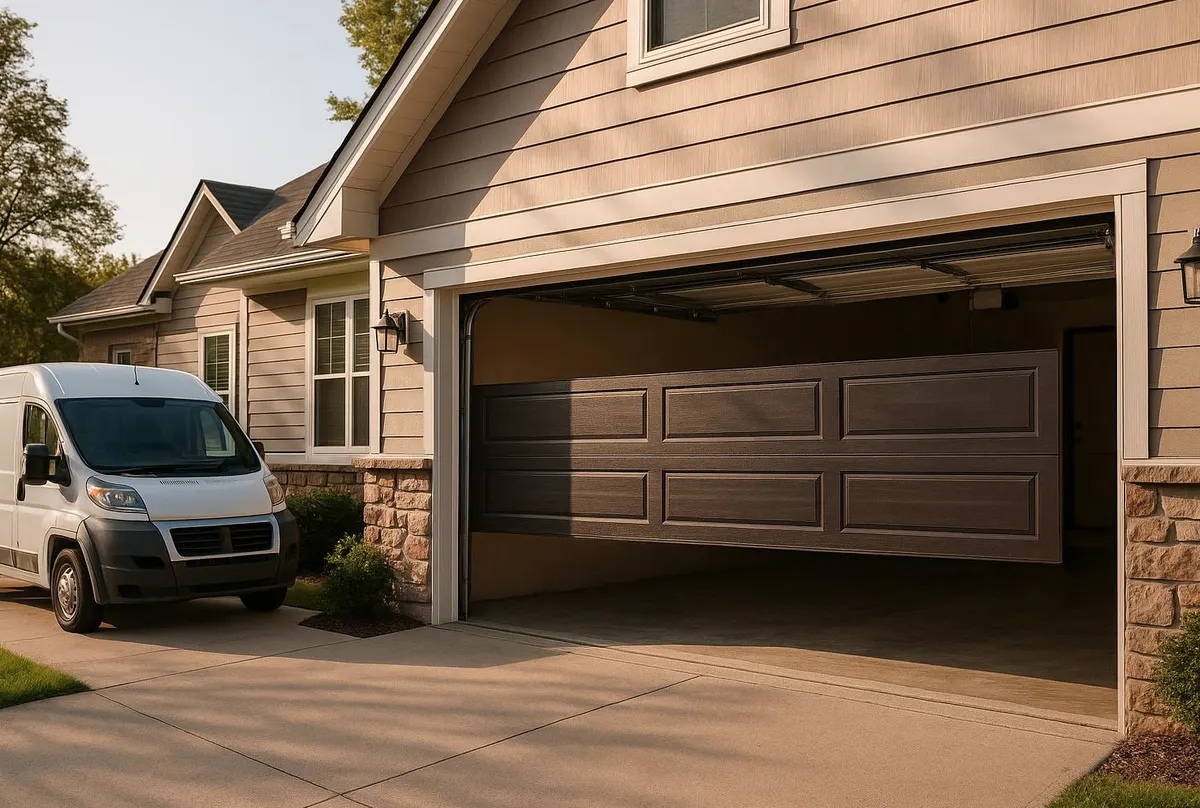
You're grabbing a cooler out of the garage after an afternoon downpour and you notice it — a thin line of daylight glowing under the door, or a damp stripe across the concrete where rain blew in sideways during the storm. Maybe it's not light at all. Maybe it's the anole lizard that darted across your workbench, or the fine layer of dust that's settled on top of storage bins you haven't touched in months. All of those are symptoms of the same thing: a worn bottom seal or cracked weatherstripping. It's also one of the cheapest, fastest fixes in garage door upkeep, and most of it is well within reach for a homeowner with an afternoon to spare.
Why Seals Wear Out Faster Here
Garage door seals take a beating in this part of Florida. Heat and UV exposure dry out and crack rubber bottom seals faster than in cooler climates. Humidity swells wood jambs and door stops, which pushes side weatherstripping out of alignment. Near the coast, salt air corrodes the aluminum retainer track and the fasteners holding it, so the seal eventually has nothing solid to grip. And during hurricane season, wind-driven rain doesn't fall straight down — it gets pushed sideways under even a small gap, which is exactly how garages end up with water along the bottom of stored boxes.
Tools You'll Need
- Tape measure
- Utility knife
- Replacement bottom seal (bulb or T-style, sized to your door width)
- Replacement vinyl weatherstripping or stop molding for the sides and top
- Rubber mallet
- Flathead screwdriver or small pry bar
- Soapy water, rag, and a shop vac or broom
- Work gloves
Step-by-Step: Replacing Bottom Seal and Weatherstripping
- Diagnose before you buy. Close the door and run your hand along the bottom seal. Look for flattening, cracking, or spots where it's pulled loose from the track. Check the side and top weatherstripping the same way — brittle, cracked, or gapped sections need replacing too.
- Measure the door width to get the right length of bottom seal, and measure the side jambs for weatherstripping.
- Unplug the opener before you start, so the door can't cycle while you're working at floor level.
- Pull the old bottom seal out of the aluminum retainer track by sliding it lengthwise, or pry it free if it's tacked onto a wood door edge.
- Clean the track with soapy water to remove grit, sand, and any corrosion buildup, then let it dry completely.
- Slide the new seal into the track and trim the ends with a utility knife so it sits flush at both edges.
- Replace side and top weatherstripping by prying off the old stop molding, cleaning the surface underneath, and tacking or pressing the new strip into place.
- Cycle the door by hand or by plugging the opener back in, and watch the bottom seal compress evenly against the slab with no binding or dragging.
- Check the corners. Gaps at the bottom corners are the most common spot for water to sneak in during a storm, so make sure the seal meets the slab fully on both sides.
What a Homeowner Can Handle
Everything above is low-risk work on a closed, de-powered door. You're not touching springs, cables, or the opener's drive system — just a seal that slides in and out of a track. Parts are inexpensive and widely available, and there's no tension to release or reset.
When to Call a Technician Instead
Stop and call for help if the retainer track itself is bent, rusted through, or separating from the panel — a new seal won't hold in a damaged track. Same goes if the door doesn't sit flat and even gaps show up on one side but not the other; that usually points to a roller or spring issue rather than the seal. If you spot rust or warping on a steel panel, especially on a home closer to the coast, or if water keeps getting in even after a fresh seal, the problem may be the slab, drainage, or door alignment rather than the weatherstripping itself. And never work near the torsion spring assembly above the door or inside the opener housing — that's technician territory.
When to Call Estero Garage Door Experts
If your seals are fine but the door still doesn't sit flush, or you're seeing rust on tracks and hardware from salt air exposure, that's a sign it's time for a Garage Door Maintenance & Tune-Up. We'll check rollers, cables, and hardware for wear before storm season wraps up, and catch small issues before they turn into an off-track door or a cable snap. If the door is visibly crooked or dragging on one side, our Off Track Door Repair service gets it running straight and sealing properly again.
If your garage door in Estero, FL is letting in water, light, or unwanted visitors, call Estero Garage Door Experts and we'll get it sealed up right.